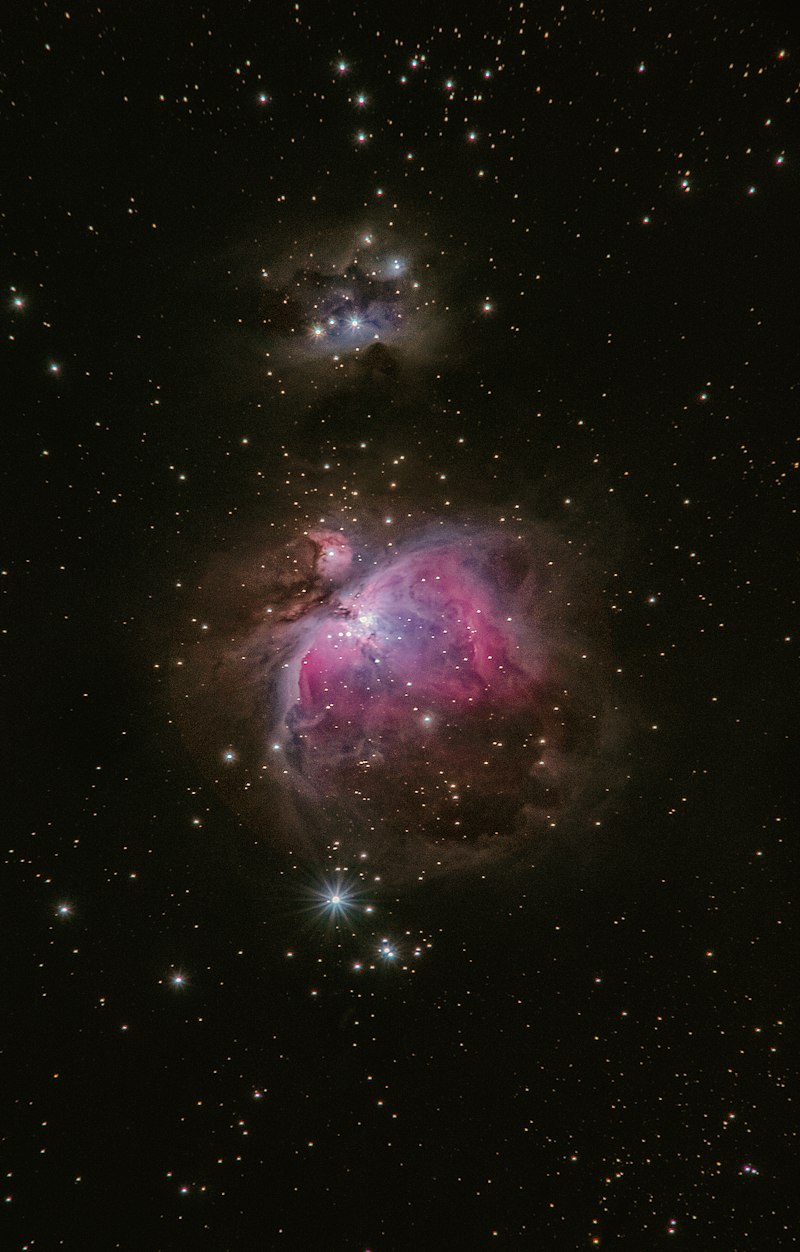
✦ Welcome to the Final Frontier ✦

COSMOS
EXPLORER

Journey through galaxies, black holes & the fabric of space‑time

β–Ό SCROLL TO EXPLORE β–Ό

Welcome

Explore the Cosmos

Use the ☰ menu to navigate to any topic. Each section opens as its own immersive page packed with facts and stunning imagery.
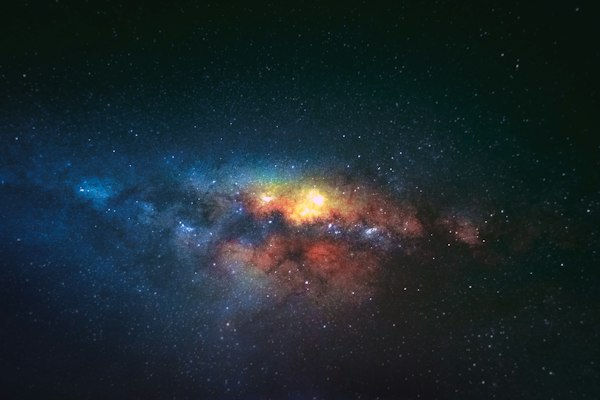
Galaxy

Study

Galaxies

From the Milky Way to the farthest observed galaxy β€” 2 trillion islands of stars.

Black Hole

Study

Black Holes

Singularities, event horizons & Hawking radiation β€” the universe's most extreme objects.

Universe

Study

The Universe

13.8 billion years of cosmic history from the Big Bang to the fate of everything.

Planets

Study

Planets

Rocky worlds to gas giants β€” all 8 planets and their incredible moons.

Nebulae

Study

Nebulae

Cosmic nurseries of gas and dust where new stars are born every moment.

Multiverse

Theory

Multiverse

Are there infinite parallel universes? The most mind-bending hypothesis in science.
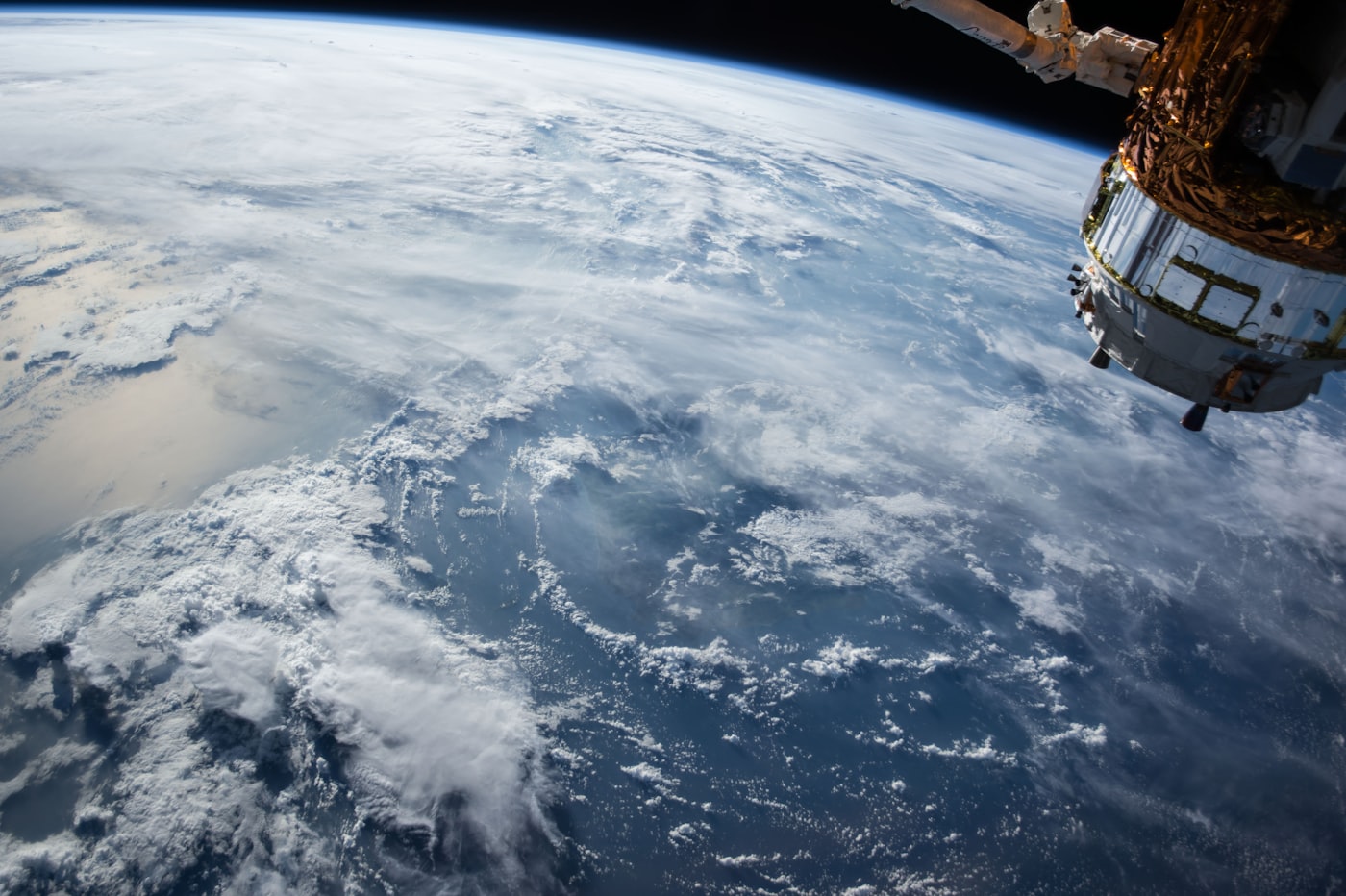
Space

✦ Creator & Explorer ✦

About

↑ Back to Top
Aarush Garg

Aarush Garg

Student & Space Enthusiast

πŸŽ’ School Student πŸ”­ Science Lover

Hi! I'm Aarush Garg β€” a school student with a huge passion for science and space. Ever since I first looked up at the night sky, I've been fascinated by the stars, planets, and the endless mysteries of the universe.
I built Cosmos Explorer as a personal project to learn more about space and share that curiosity with others. From black holes to the multiverse, this site collects everything that amazes me about the cosmos.
Science isn't just a subject for me β€” it's the way I understand the world. I hope this site sparks the same curiosity in you that the night sky sparks in me. πŸš€

🌌 GalaxiesπŸ•³οΈ Black Holes πŸͺ Planetsβ˜€οΈ The Sun ♾️ MultiverseπŸ’« Nebulae
Mission

Why Space?

πŸ”­

Discovery

Every night the sky holds thousands of unanswered questions. Cosmos Explorer helps bridge the gap between curiosity and knowledge.

πŸ“š

Education

Curated study sections cover everything from stellar nurseries to string theory β€” explained in an accessible, engaging way.

πŸš€

Inspiration

Carl Sagan said "The cosmos is within us." Understanding space is understanding ourselves β€” and our place in something far greater.

Scale

✦ From Quarks to Superclusters ✦

Scale of the Universe

Zoom through 62 orders of magnitude β€” from Planck length to the observable universe.

↑ Back to Top

Can't see? Open scaleofuniverse.com β†’

Cosmic Scale Deep Space
Key Scales

The observable universe spans 93 billion light-years. A proton is 10⁻¹⁡ m wide. The interactive tool lets you zoom from Planck length (10⁻³⁡ m) to the observable universe (10²⁷ m) β€” a ratio of 10⁢².

Planck β€” 10⁻³⁡ mAtom β€” 10⁻¹⁰ mEarth β€” 10⁷ mUniverse β€” 10²⁷ m
ISS

✦ 400 km Above You Right Now ✦

ISS Live Tracker

Track the International Space Station in real time via ESA.

↑ Back to Top

Blocked? Open on ESA β†’

ISS exterior Astronaut spacewalk
Fast Facts

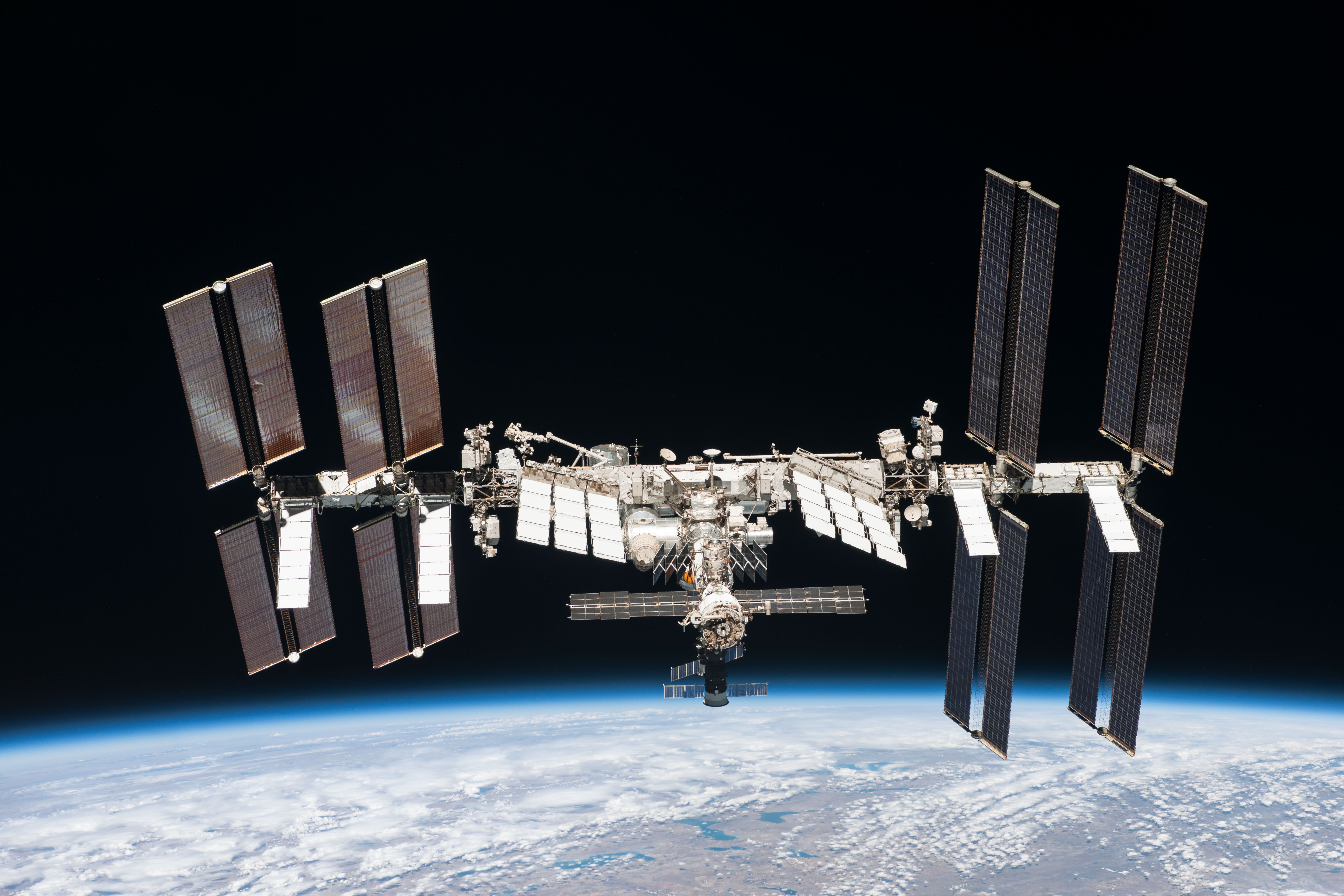
The ISS has been continuously inhabited since November 2000. It orbits at 7.66 km/s β€” 15.5 orbits per day β€” completing a full loop every 90 minutes. It spans 109 metres and has hosted astronauts from 19 countries.

400 km altitude28,000 km/h~15 orbits/dayInhabited since 2000
Space video

✦ Official NASA Media ✦

NASA Space Observatory

↑ Back to Top

NASA Hubble Space Telescope Gallery

Official NASA Hubble β€’ Flickr

Browse thousands of breathtaking real images captured by the Hubble Space Telescope β€” from swirling galaxies and colorful nebulae to distant star clusters. All images are free and official from NASA.

Hubble Galaxy Hubble Nebula
πŸ”­ Open NASA Hubble Gallery β†’

NASA James Webb Space Telescope Gallery

Official NASA Webb β€’ Flickr

The James Webb Space Telescope captures the universe in infrared light β€” revealing galaxies that formed just 300 million years after the Big Bang, hidden star nurseries, and the atmospheres of distant exoplanets.

Webb Deep Field Webb Galaxy
🌌 Open NASA Webb Gallery β†’

NASA Eyes on the Solar System

Interactive 3D Explorer β€’ nasa.gov

Explore every planet, moon, asteroid and spacecraft in our solar system β€” shown at their real positions right now. A fully interactive 3D space experience directly from NASA.

πŸͺ Open NASA Eyes β†’
Galaxy view Stars
Space info

✦ Essential Knowledge ✦

Space Information

↑ Back to Top
Hubble Deep Field Deep Space Objects
🌌

Observable Universe

93 billion light-years in diameter, containing ~2 trillion galaxies, each home to hundreds of billions of stars.

🌑️

Temperature of Space

Deep space sits at βˆ’270.45Β°C (2.7 K) β€” the Cosmic Microwave Background remnant of the Big Bang.

πŸ’¨

Speed of Light

299,792 km/s. It takes 8 minutes to reach Earth from the Sun, 4 years to Proxima Centauri, 2.5M years to Andromeda.

πŸ”­

Dark Matter & Energy

27% dark matter + 68% dark energy = 95% of everything. Ordinary matter β€” all we can see β€” is just 5%.

πŸ’₯

The Big Bang

13.8 billion years ago, our universe expanded from an infinitely hot, dense singularity. Atoms formed within 380,000 years.

πŸ›Έ

Space is Silent

No air molecules means no sound. Spacecraft use radio waves to communicate β€” electromagnetic signals that travel at light speed.

⚑

Gamma Ray Bursts

The brightest explosions in the universe β€” releasing more energy in seconds than the Sun will in its entire 10-billion-year lifetime.

🌊

Gravitational Waves

Ripples in spacetime caused by colliding black holes or neutron stars. First detected by LIGO in 2015, predicted by Einstein in 1916.

COSMOS EXPLORER  |  Science from NASA, ESA

Galaxy

✦ 2 Trillion Islands of Stars ✦

Galaxies

↑ Back to Top

The Milky Way

Our Home Galaxy
Milky Way Night Sky Milky Way arch

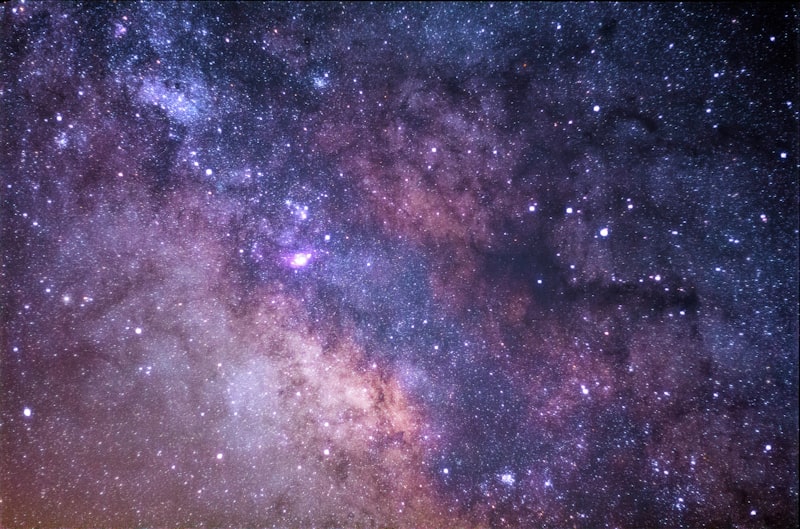
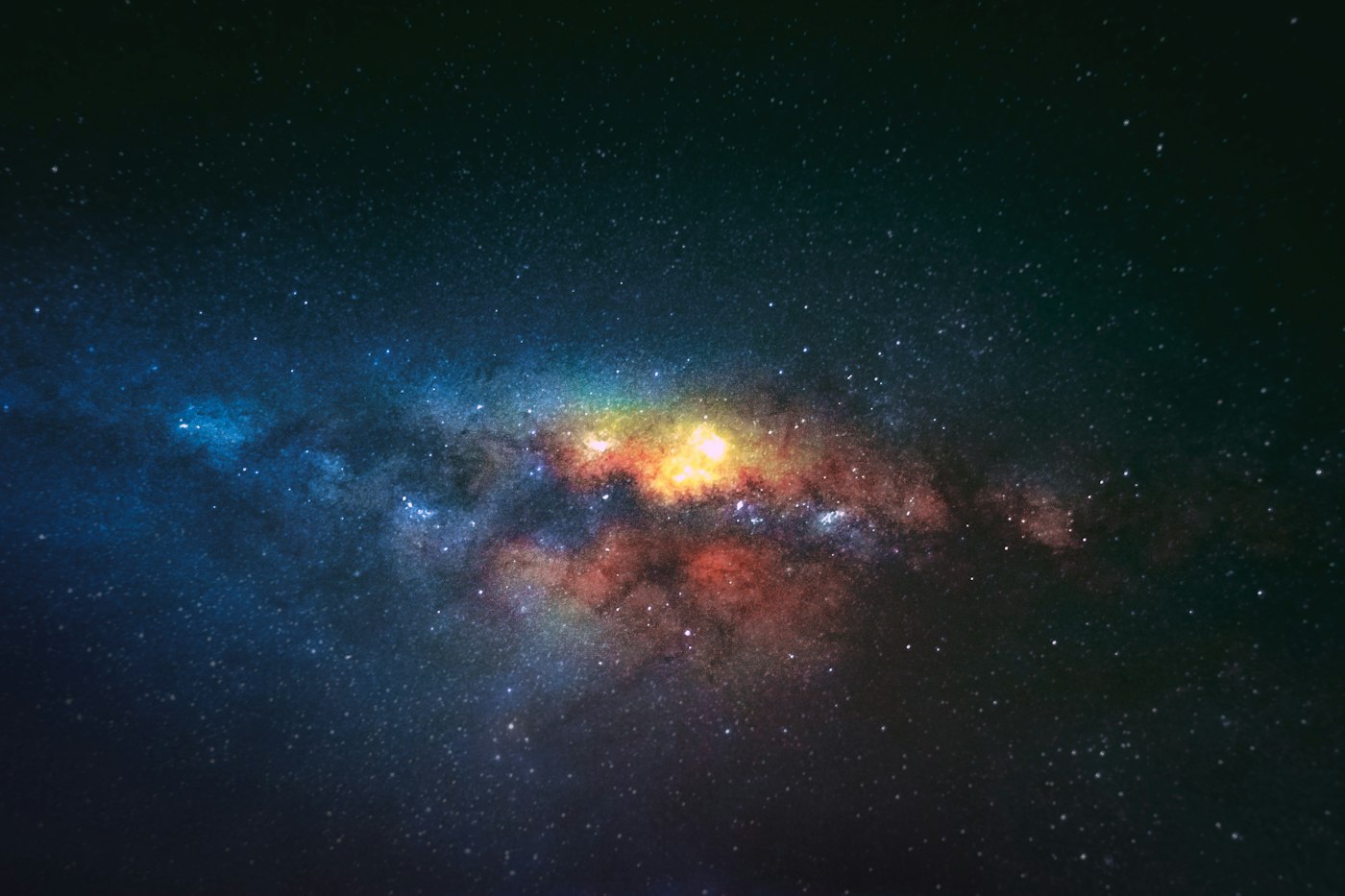
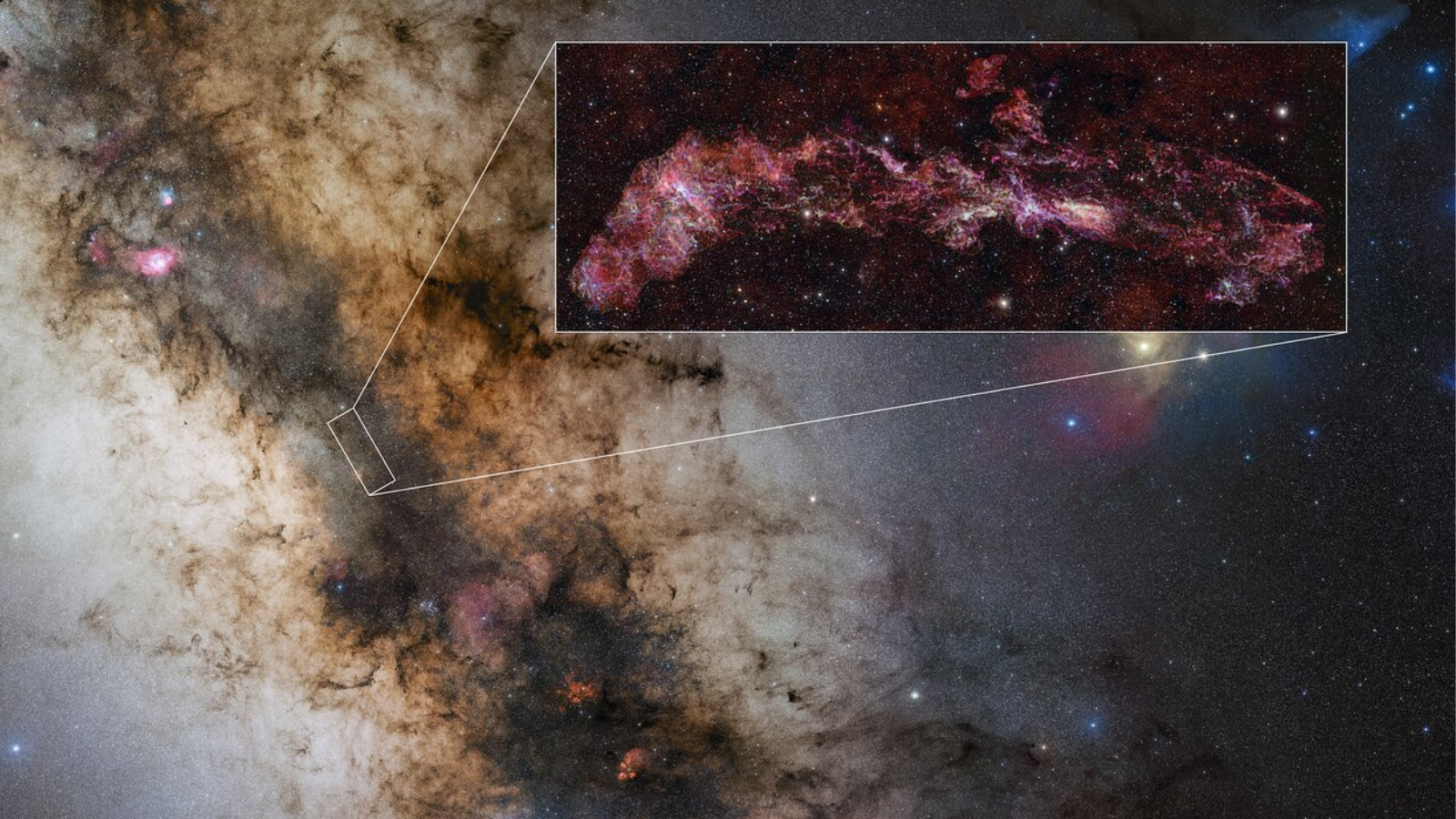
The Milky Way is a barred spiral galaxy ~100,000 light-years across, containing 200–400 billion stars. Our solar system sits in the Orion Arm, 26,000 light-years from the galactic core. At the center: Sagittarius A*, a supermassive black hole 4 million times the mass of the Sun.

100,000 ly wide400B starsSag A* at centerBarred spiral

Spiral Galaxies

The Most Recognisable Type
NGC414 Spiral Galaxy Andromeda Galaxy

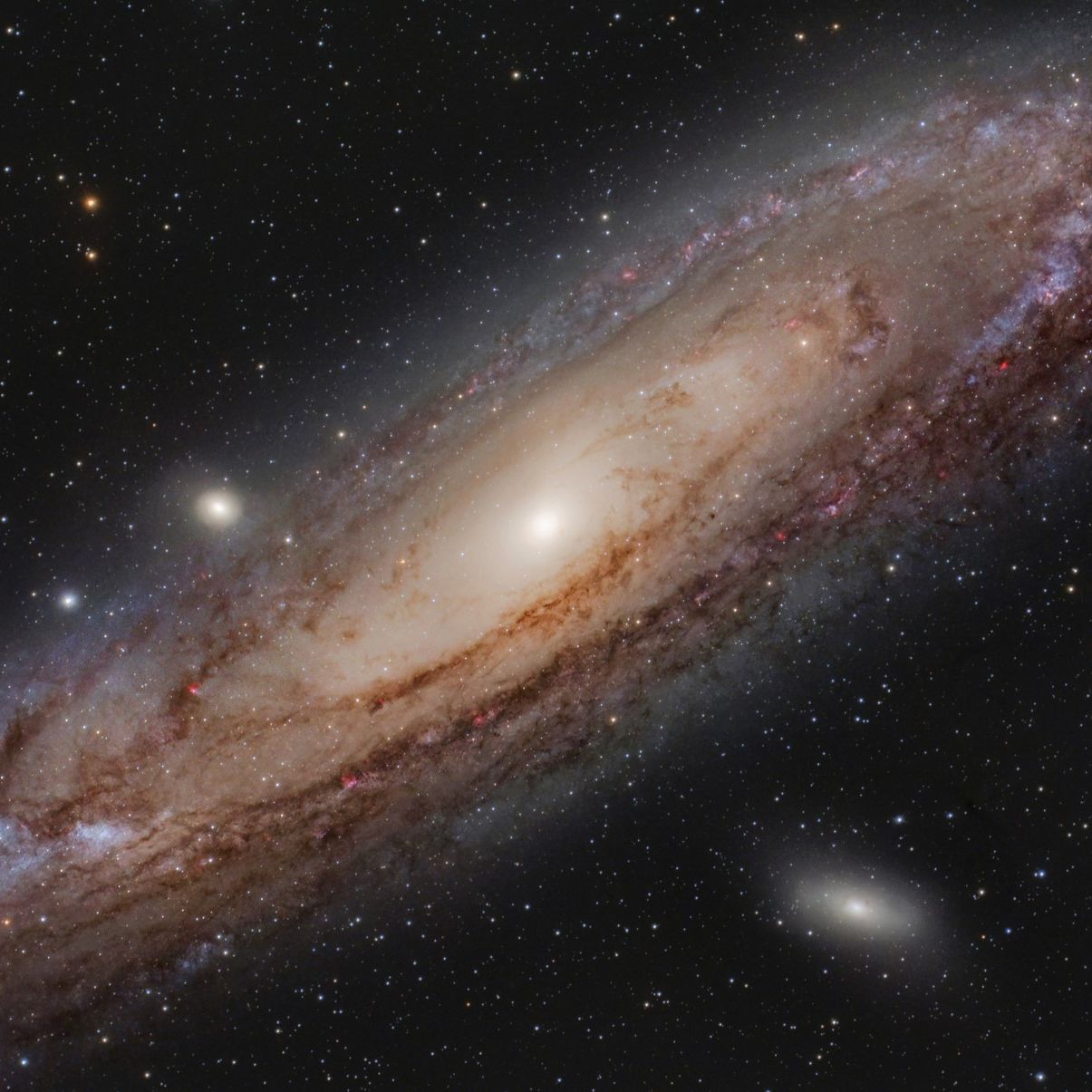
Spiral galaxies feature sweeping arms of stars, gas, and dust. Andromeda (M31), 2.5 million light-years away, is our nearest large neighbour β€” and is on a collision course with the Milky Way, set to merge in ~4.5 billion years.

Andromeda β€” 2.5M lyCollision ~4.5B yr~60% of galaxies

Elliptical & Irregular Galaxies

Other Forms

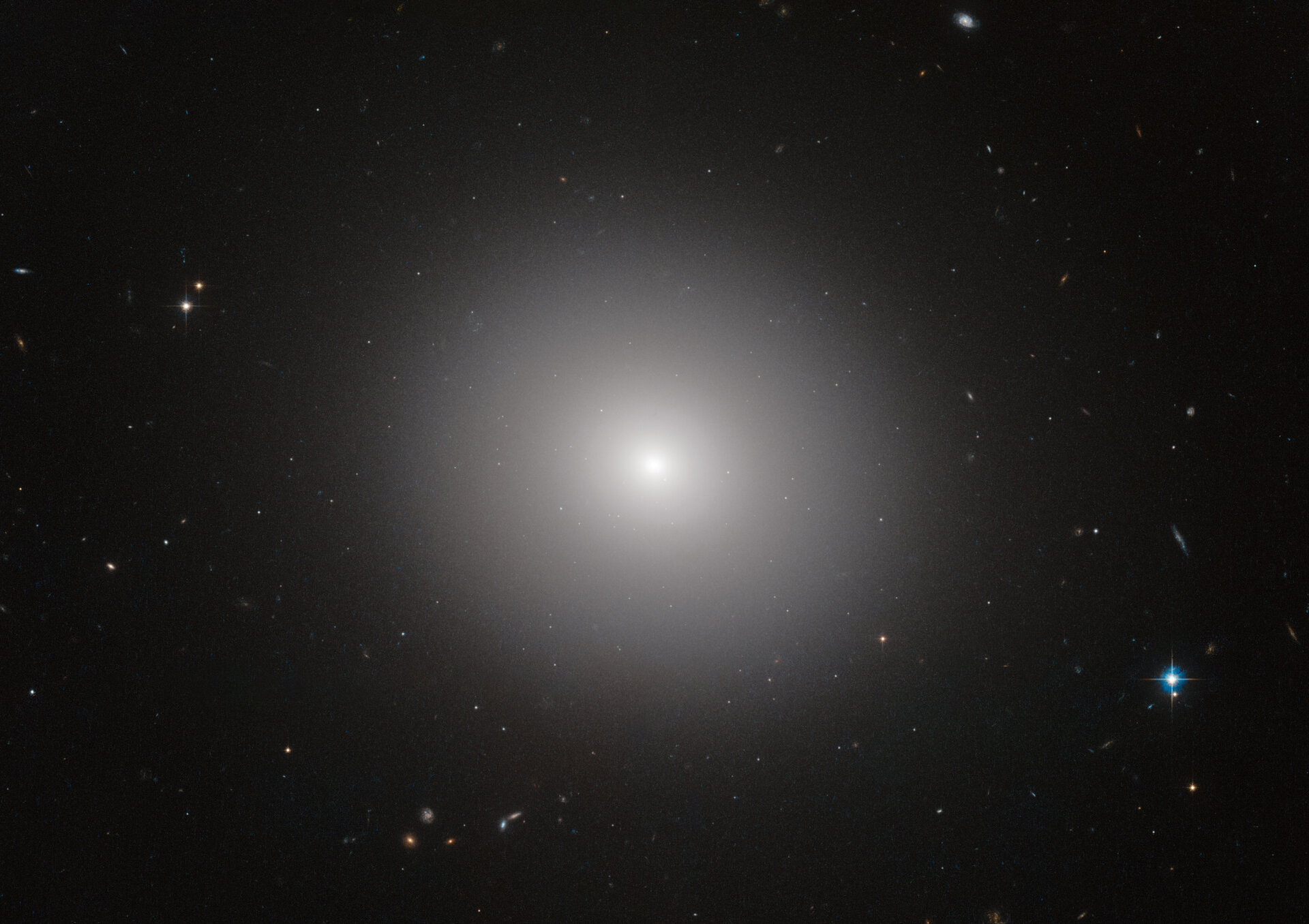
Elliptical galaxies are featureless ellipsoids containing mostly old, red stars. Irregular galaxies have no clear shape β€” often the result of galactic collisions. The Large Magellanic Cloud, visible from the Southern Hemisphere, is an irregular satellite of the Milky Way.

Oldest starsLittle star formationLMC β€” irregular

COSMOS EXPLORER  |  Galaxy data from NASA/ESA

Planets

✦ 8 Worlds, Infinite Wonder ✦

Planets

↑ Back to Top

Rocky Planets

Mercury, Venus, Earth, Mars
Earth Blue Marble Mars

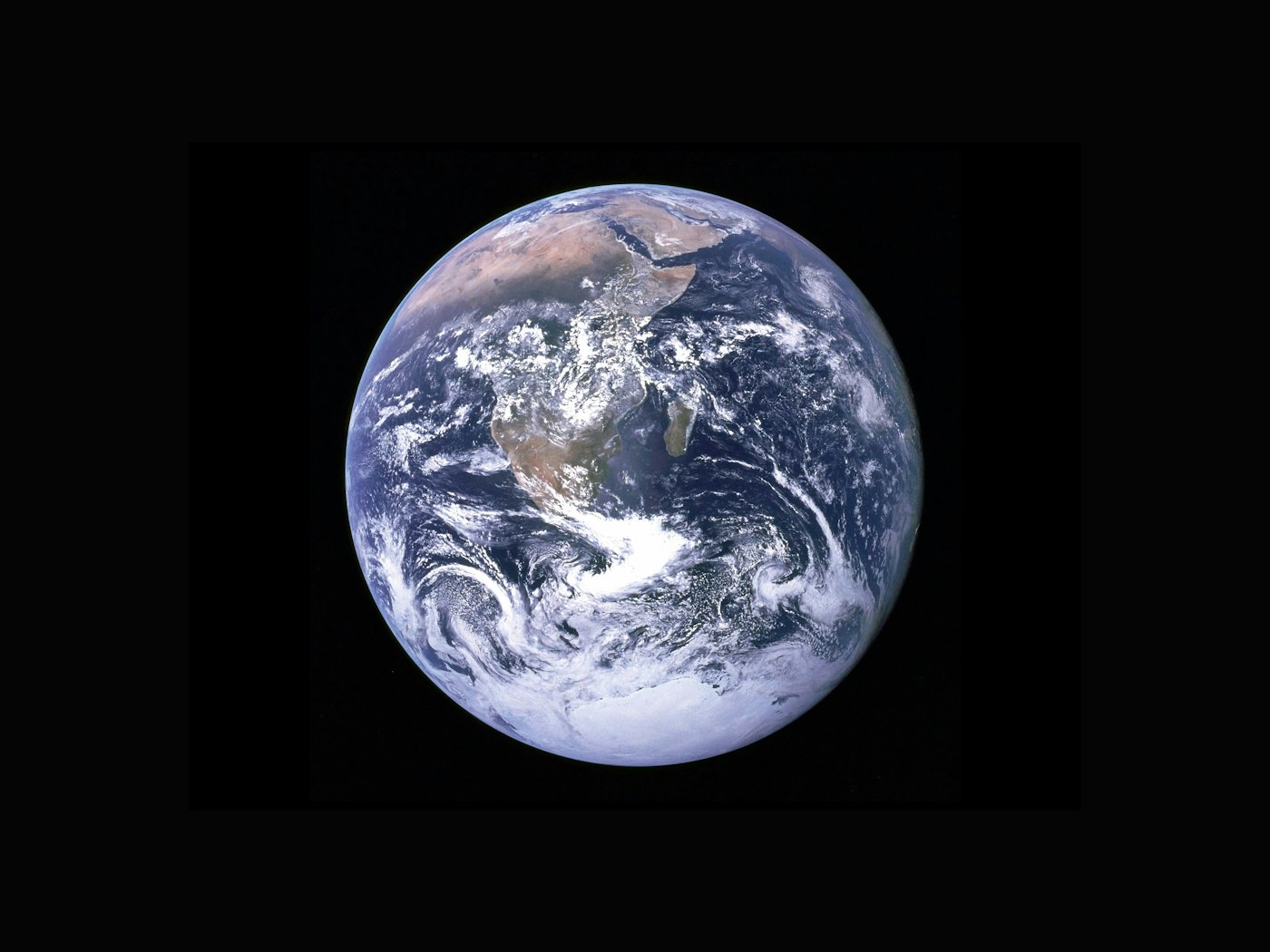
Earth is the only known world with liquid water and complex life. Mars hosts Olympus Mons β€” the solar system's tallest volcano at 22 km. Venus has a runaway greenhouse atmosphere at 465Β°C β€” hotter than Mercury despite being farther from the Sun.

4 rocky worldsLife on EarthMars β€” 22 km volcano

Gas Giants β€” Jupiter & Saturn

The Outer Giants
Jupiter Saturn

Jupiter could contain 1,300 Earths. Its Great Red Spot is a storm over 350 years old. Saturn's rings span 282,000 km yet are only 10–100 m thick. Europa and Enceladus may harbour subsurface oceans with conditions for life.

Jupiter β€” 1300 EarthsSaturn's ringsEuropa β€” subsurface ocean

Ice Giants β€” Uranus & Neptune

The Distant Twins
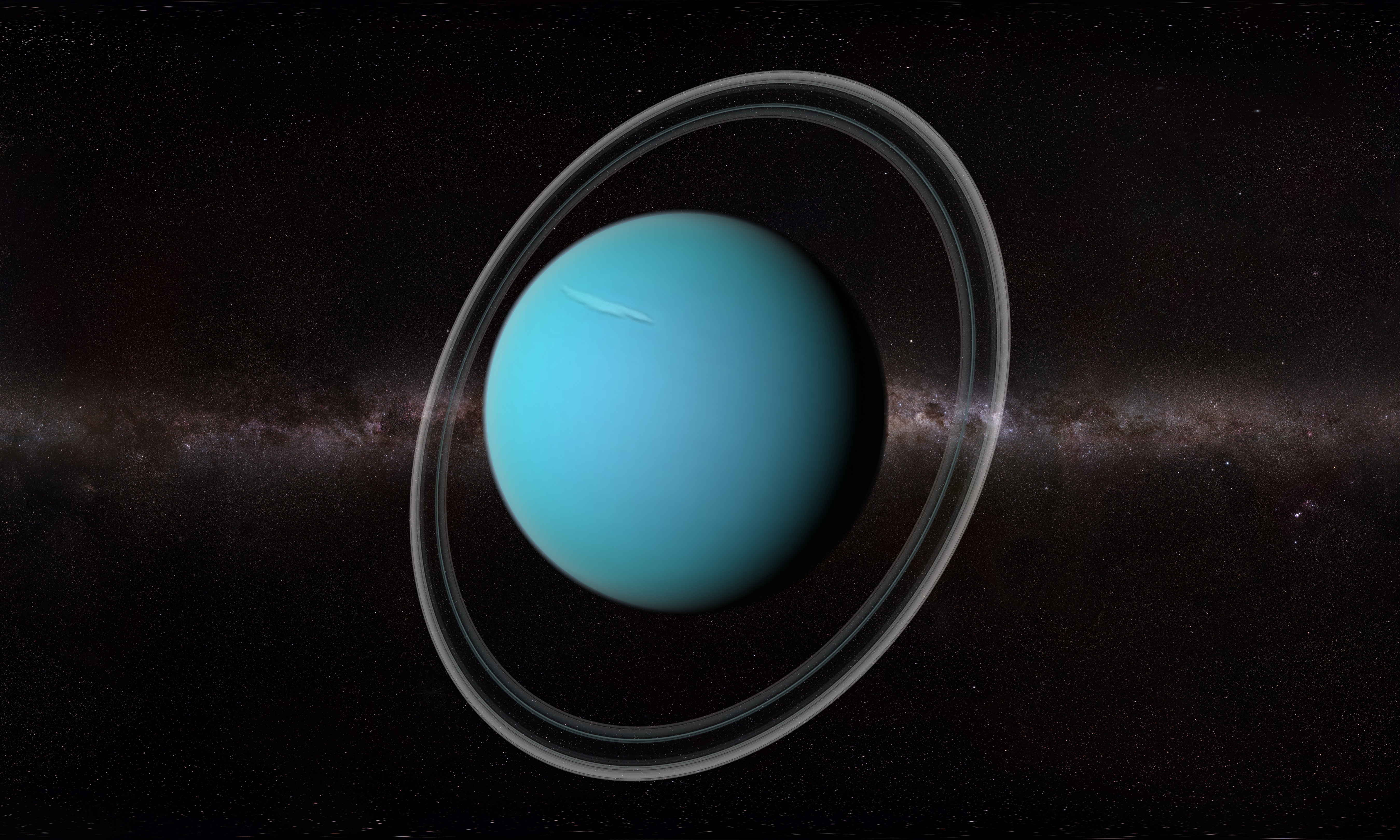
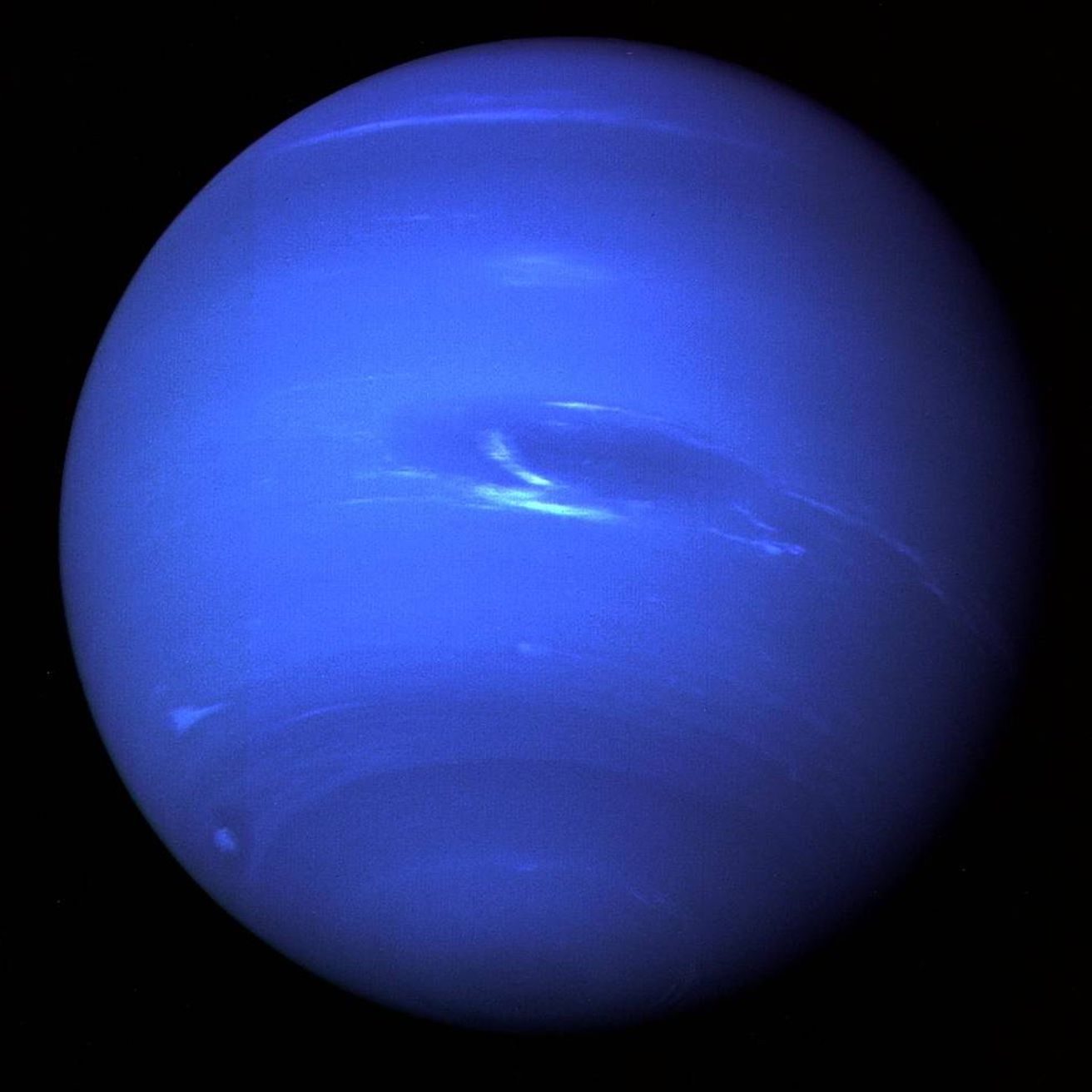
Uranus Neptune

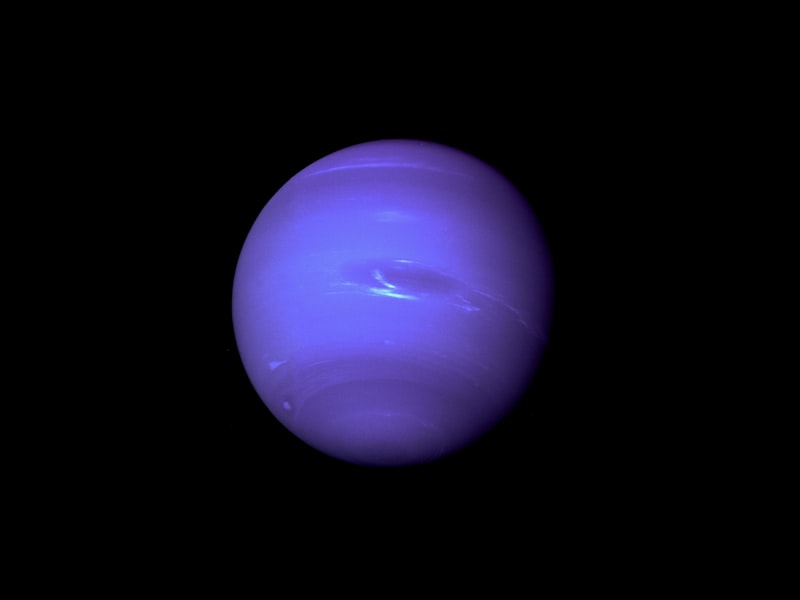
Uranus spins on its side (98Β° axial tilt) β€” likely knocked over by an ancient giant impact. Neptune has the strongest winds in the solar system, reaching 2,100 km/h, despite receiving 900Γ— less sunlight than Earth.

Uranus β€” 98Β° tiltNeptune β€” 2100 km/h windsIce giants

COSMOS EXPLORER  |  Planetary data from NASA

Universe

✦ 13.8 Billion Years of History ✦

The Universe

↑ Back to Top

The Big Bang & Cosmic Inflation

Origin Story
CMB Map Stars forming

13.8 billion years ago, the universe expanded from an infinitely hot singularity. In the first second, cosmic inflation expanded space faster than light. Within 380,000 years, atoms appeared and light traveled freely β€” the CMB (Cosmic Microwave Background) is that first light, still detectable today.

13.8B years agoCMB still detectableInflation theory

The Cosmic Web

Large-Scale Structure
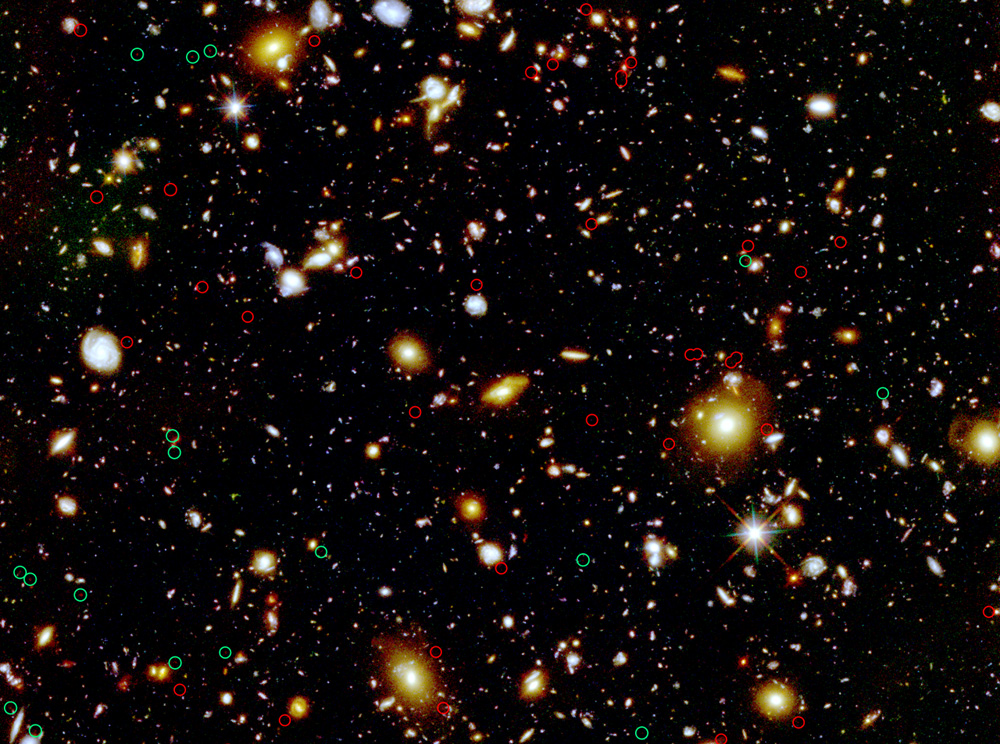
Hubble Ultra Deep Field Cosmic structure

On the largest scales, matter forms a cosmic web of filaments, sheets, and voids. The Hubble Ultra Deep Field image β€” a tiny patch of sky β€” revealed over 10,000 galaxies. The observable universe contains around 2 trillion galaxies.

2 trillion galaxiesCosmic voidsDark matter skeleton

Fate of the Universe

Possible Endings
Dark universe Expanding universe

Possible fates include the Big Freeze (max entropy), Big Rip (dark energy tears everything apart), or Big Crunch (collapse). Current evidence favours the Big Freeze β€” in ~100 trillion years, star formation ceases and the cosmos descends into cold darkness.

Accelerating expansionBig Freeze (likely)100T years to dark

COSMOS EXPLORER  |  Cosmology from NASA & ESA

Multiverse

✦ Infinite Parallel Realities ✦

The Multiverse

↑ Back to Top

Eternal Inflation & Bubble Universes

Level I & II Multiverse
Cosmic inflation Bubble universes

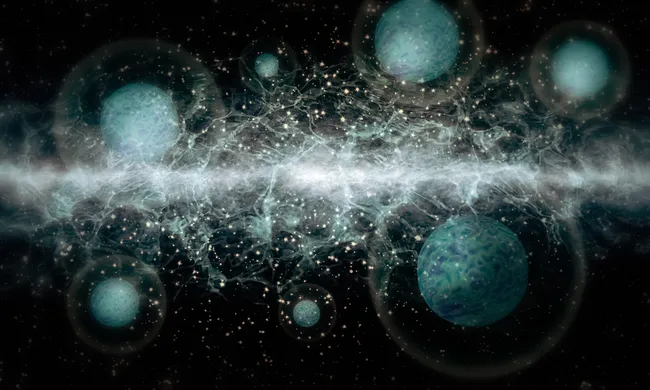
In eternal inflation, quantum fluctuations cause regions to stop inflating, each becoming a "bubble universe." Our entire observable universe may be one bubble in an infinite foam β€” each with potentially different physical constants, dimensions, and laws.

Eternal inflationBubble universesDifferent physics

Many-Worlds Interpretation

Quantum Branching
Quantum worlds Branching realities

Hugh Everett's 1957 interpretation proposes every quantum event causes the universe to branch β€” one for each possible outcome. Every quantum measurement that could go multiple ways does go multiple ways, in separate, non-communicating branches of reality.

Hugh Everett β€” 1957Quantum branchingNo wave collapse

String Theory Landscape

10⁡⁰⁰ Possible Universes
Higher dimensions Extra dimensions

String theory predicts up to 10⁡⁰⁰ different possible universes β€” the "landscape" β€” each with its own physical constants. In most, atoms cannot form or stars cannot ignite. We exist in one of the rare configurations compatible with life.

10⁡⁰⁰ vacuaExtra dimensionsAnthropic principle

COSMOS EXPLORER  |  Theoretical physics

Black Hole M87

✦ Where Physics Breaks Down ✦

Black Holes

↑ Back to Top

Formation & Types

How Black Holes Are Born
M87 First Image Black hole accretion disk

Black holes form when massive stars exhaust their fuel and collapse. M87* β€” the first-ever photographed black hole, imaged in 2019 by the Event Horizon Telescope β€” is 6.5 billion solar masses. Sagittarius A*, at our galaxy's center, is 4 million solar masses.

Stellar & SupermassiveM87* β€” 20196.5B solar masses

Event Horizon & Singularity

The Point of No Return
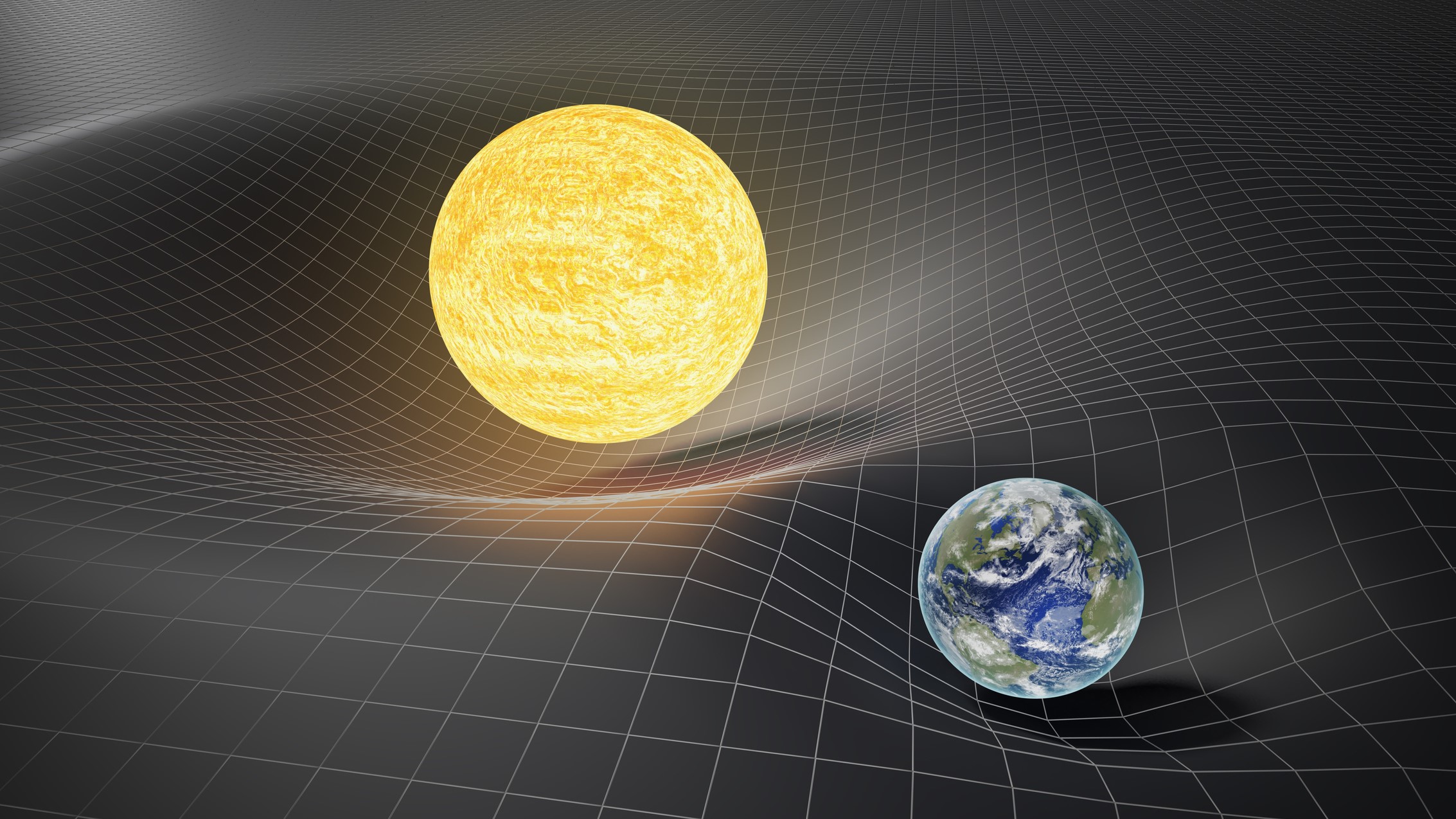
Spacetime curvature Gravity warping

Beyond the event horizon, not even light escapes. Time dilation becomes extreme β€” a clock near it appears to slow to a stop for a distant observer. At the center is the singularity β€” infinite density where all known physics breaks down.

Event horizonTime dilationSingularity

Hawking Radiation

Quantum Effects & the Information Paradox
Quantum vacuum Black hole evaporation concept

Stephen Hawking predicted that quantum effects cause black holes to slowly emit thermal radiation and evaporate over astronomical timescales. The Information Paradox β€” what happens to information about matter that fell in? β€” remains one of the deepest unsolved problems in physics.

Hawking radiationEvaporationInformation paradox

COSMOS EXPLORER  |  Data from EHT, NASA

The Sun

✦ Our Star ✦

The Sun

↑ Back to Top

Structure & Nuclear Fusion

G-Type Main Sequence Star
Sun SDO Solar corona

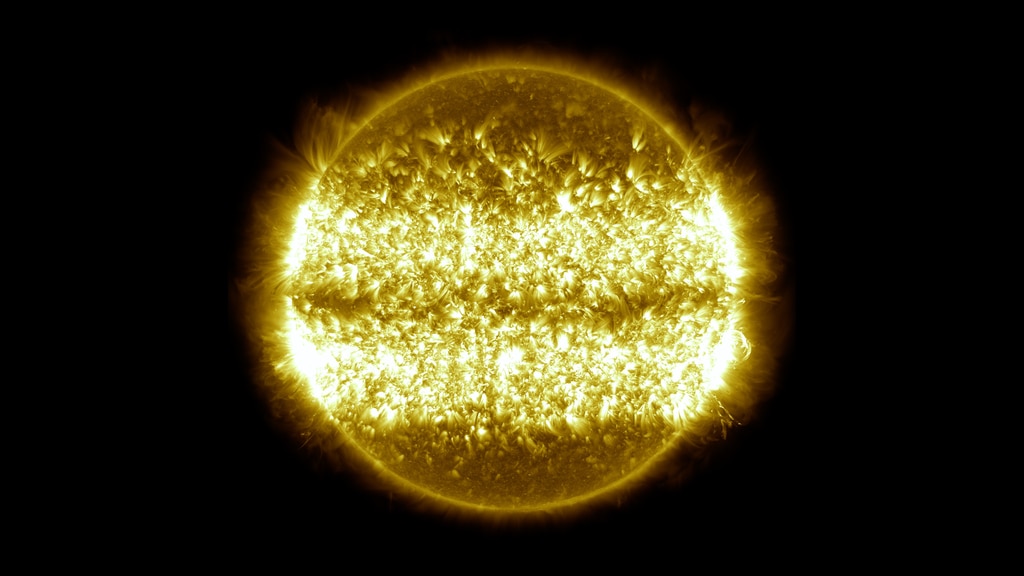
The Sun is 1.39 million km across (109 Earths), containing 99.86% of the solar system's mass. At its 15-millionΒ°C core, nuclear fusion fuses 620 million tonnes of hydrogen into helium per second. That energy takes 100,000 years to reach the surface but only 8 minutes to reach Earth.

4.6B years old5,778 K surface109Γ— Earth's size

Solar Activity

Flares, Sunspots & Solar Wind

The Sun follows an 11-year activity cycle. Solar flares and coronal mass ejections (CMEs) can disrupt satellites, GPS, and power grids. The solar wind streams charged particles creating Earth's auroras and shaping the heliosphere β€” a bubble extending 125 AU.

11-year cycleSolar windAurora creation

Life Cycle & Death

Red Giant β†’ White Dwarf
Star death

In ~5 billion years, the Sun expands into a red giant, engulfing Mercury and Venus. It then sheds its outer layers as a planetary nebula, leaving a white dwarf β€” roughly Earth-sized β€” slowly cooling over trillions of years.

5B years leftRed giant phaseWhite dwarf end

COSMOS EXPLORER  |  Solar data from NASA/SDO

✦ Where Stars Are Born & Die ✦

Nebulae

↑ Back to Top

Emission Nebulae β€” Stellar Nurseries

Birthplaces of Stars

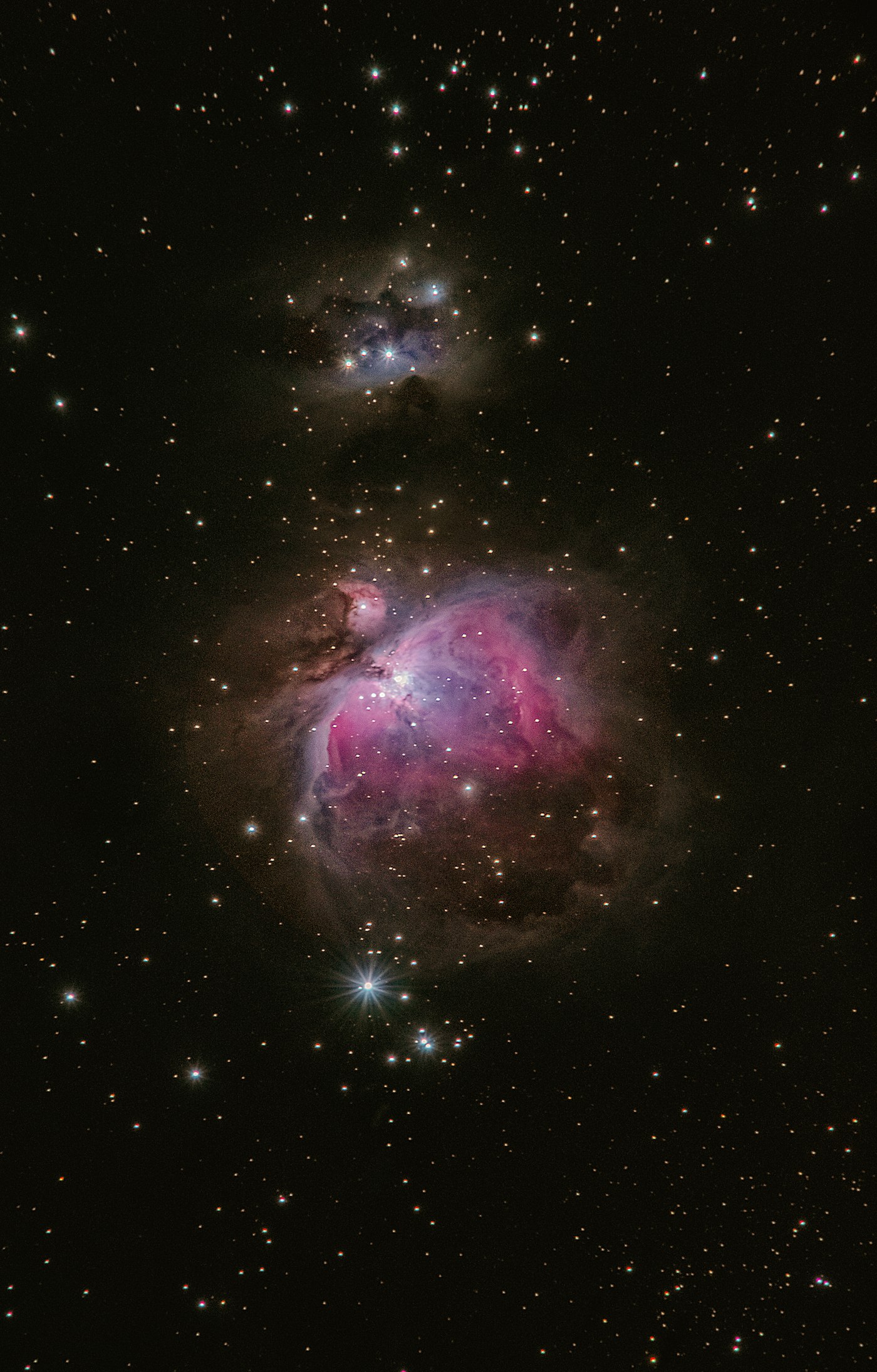
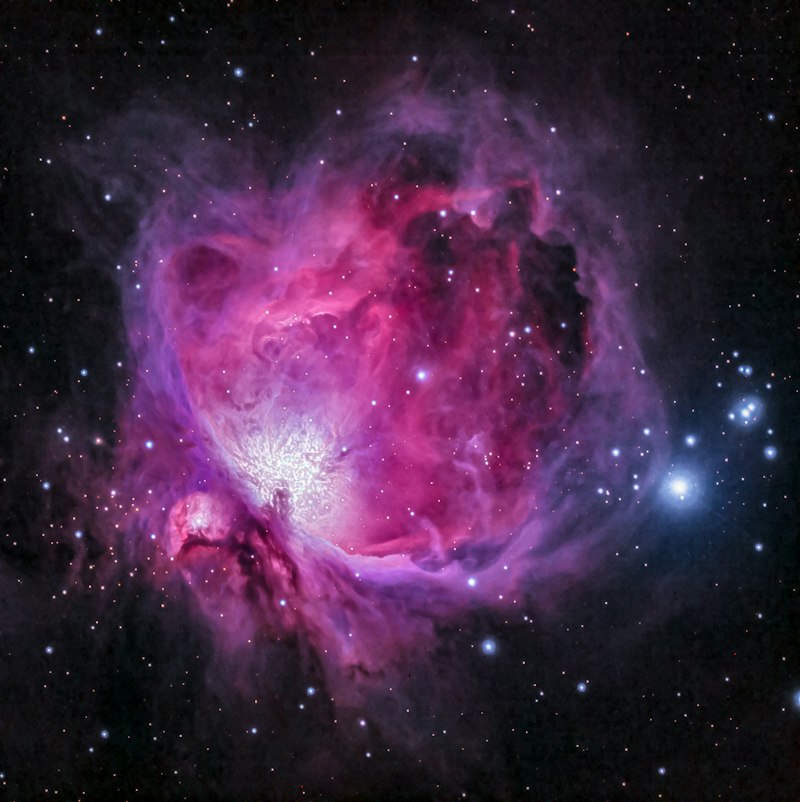
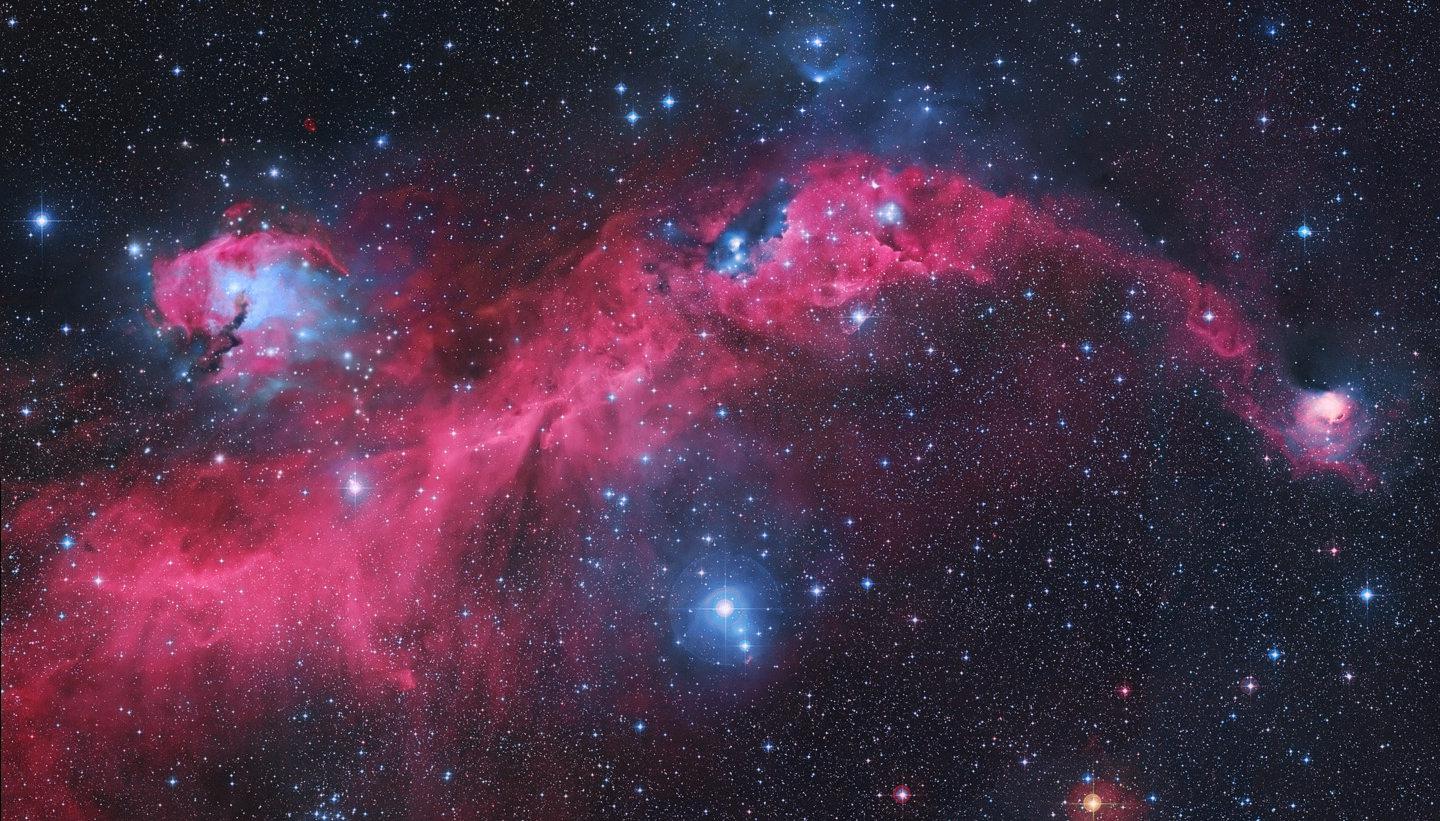
Emission nebulae are ionised gas clouds glowing from radiation of nearby hot stars. The Orion Nebula (1,344 ly away) is the nearest star-forming region, visible to the naked eye. The Pillars of Creation β€” towering star-forming columns 7,000 ly distant β€” were famously imaged by Hubble in 1995 and re-imaged by JWST in 2022.

Orion β€” 1,344 lyPillars β€” 7,000 lyJWST 2022

Planetary Nebulae

Death Shrouds of Sun-like Stars

When a Sun-like star dies, it sheds its outer layers as a glowing planetary nebula. The Helix Nebula (650 ly away) is nicknamed the "Eye of God." The Ring Nebula (M57) is the remnant of a star that died ~6,500 years ago, with a white dwarf at its center.

Helix β€” "Eye of God"Ring Nebula β€” M57White dwarf core

Supernova Remnants

Aftermath of Stellar Explosions

When a massive star explodes as a supernova, ejected material expands as a supernova remnant. The Crab Nebula (SN 1054, observed by Chinese astronomers) contains a pulsar spinning 30 times/second at its heart. These remnants seed the galaxy with heavy elements β€” including the iron in your blood.

Crab β€” SN 1054Pulsar at centerSeeds heavy elements

COSMOS EXPLORER  |  Images from Hubble & JWST

Stars

✦ Nuclear Furnaces ✦

Stars

↑ Back to Top

Star Classification

Spectral Types O B A F G K M
Star field Stars night sky

Stars are classified by temperature. Blue O-type supergiants are hottest and most massive but short-lived. Red M-type dwarfs are cool, dim, and live for trillions of years β€” they're 70% of all stars. Our G-type Sun is middle-of-the-road, ideal for stable long-term planetary conditions.

O B A F G K MSun = G-typeRed dwarfs β€” 70% of stars

Neutron Stars & Pulsars

Stellar Remnants

Neutron stars are just 20 km across but denser than atomic nuclei β€” a teaspoon weighs a billion tonnes. Pulsars are rotating neutron stars emitting beams of radiation with clock-like precision, used as natural cosmic timekeepers to test general relativity.

20 km acrossBillion tonnes/teaspoonPulsars β€” cosmic clocks

COSMOS EXPLORER  |  Stellar physics from NASA

Asteroid

✦ Remnants of Creation ✦

Asteroids & Comets

↑ Back to Top

The Asteroid Belt

Between Mars & Jupiter
Asteroid field Space rocks

Between Mars and Jupiter lie millions of rocky bodies from dust grains to Ceres (940 km, a dwarf planet). Despite movie depictions, the belt is mostly empty β€” a spacecraft flying through is unlikely to encounter a single asteroid. These are the building blocks of a planet that never formed due to Jupiter's gravity.

Ceres β€” dwarf planetJupiter prevented formationRocky & metallic

Comets β€” Dirty Snowballs

Ice, Dust & Spectacular Tails
Comet tail Comet in space

Comets are icy bodies from the Kuiper Belt or Oort Cloud. Near the Sun, solar heat vaporises ice, creating a glowing coma and twin tails β€” dust and ion. Halley's Comet returns every 75–76 years. The Rosetta mission in 2014 achieved the first-ever comet landing, on Comet 67P.

Halley's β€” 75 yr periodOort Cloud originRosetta β€” first landing

COSMOS EXPLORER  |  Data from NASA/ESA

Dark Matter

✦ 95% of Everything is Hidden ✦

Dark Matter & Dark Energy

↑ Back to Top

Dark Matter

The Invisible Skeleton of the Universe
Dark matter web

Dark matter makes up ~27% of the universe but doesn't emit, absorb, or reflect light. Its existence is inferred from galaxies rotating too fast for their visible mass, and from gravitational lensing bending light more than visible matter can account for. Leading candidates: WIMPs and axions β€” neither yet directly detected.

27% of universeWIMPs & axionsGravitational evidence

Dark Energy

The Force Accelerating Cosmic Expansion
Expanding universe Cosmic expansion

Dark energy (~68% of the universe) was discovered in 1998 from observations of distant supernovae. It acts as a negative pressure, pushing galaxies apart at an accelerating rate. The simplest explanation is Einstein's cosmological constant β€” an intrinsic energy of empty space. Its nature remains cosmology's biggest open question.

68% of universeDiscovered 1998Cosmological constant

COSMOS EXPLORER  |  Research from NASA & CERN